
Regreen.
Regreen.
A Life Not Our Own.
We cannot command life to return. We can only tend the conditions in which it might.
Perhaps legacy is not what remains ours, but what remains alive when it no longer needs us.
For reading "Regreen", we suggest your listening to "The Return" by Byron Metcalf and Jennifer Grais.
There are moments when something we thought had gone dormant suddenly turns green again.
Not because we forced it. Nor because we rescued it. But because somewhere beneath what appeared lifeless, an ember had remained.
Waiting.
This week, I watched one of those embers become fire.
I used to believe the grass grew greener wherever I went.
This week taught me otherwise.
Many years ago, a group of us planted something. A chamber. A bridge. A gathering place for a community far from home.
For years it grew. It evolved. Then came the pandemic.
Activity stopped. People dispersed. What had once felt vibrant became quiet. A few gatherings continued, but there were moments when it seemed entirely possible that something we had loved into existence might simply disappear.
And perhaps that would have been all right.
Everything has its season.
But this was not its time to die.
Over the past year, new hands began tending what remained.
A new Chair stepped forward. A new team gathered. Energy returned. Ideas became programmes. Programmes became encounters. A community rediscovered its capacity to gather, collaborate and create.
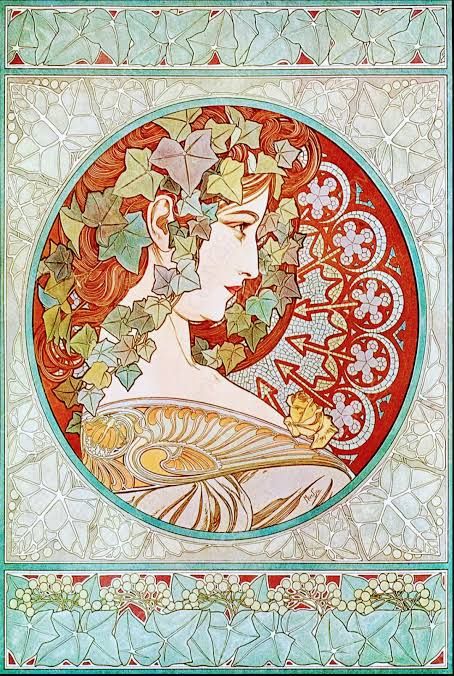
And this week, watching hundreds of people come together again, I realised that the laurel had turned green again.
Not the same tree it had once been.
Not a return to what was.
Something alive, renewed, becoming.
There was pride in seeing it. But beneath the pride was another feeling.
Gratitude.
Because perhaps the greatest privilege of creating something is not having it remain ours.
It is witnessing the moment when it no longer needs to be.
Leadership can easily confuse stewardship with possession.
We begin something. We nurture it. We sacrifice for it. Inevitably, part of ourselves becomes intertwined with what we have helped create.
And slowly, sometimes almost imperceptibly, I helped bring this into being can become this belongs to me.
Life has another lesson.
What is truly alive cannot be possessed.
Children. Ideas. Communities. Institutions. Relationships. Forests. Rivers.
Even the stories we tell.
We may accompany them. Protect them. Nourish them. Help them find their way. Love them fiercely.
But eventually, if our tending has succeeded, they must find lives of their own.
There was a time when the future of what I had helped found could have become a struggle for control.
Instead, another possibility emerged.
Support. Listening. Counsel. Trust.
What might have become confrontation gave way to collaboration.
And somewhere along the way, a woman I barely knew became someone whose leadership I deeply admire, whose courage I celebrate and whose journey I feel privileged to accompany.
Perhaps empowerment begins precisely there.
When another person's strength no longer threatens our place in the story.
When we can say:
Take it.
Make it yours.
Let me help you become everything you are capable of becoming.
I met her husband this week. He approached me and thanked me for supporting her. The simplicity and sincerity of his words moved me more than he could have known.
Sometimes we do not realise what our presence has meant in another person's journey until someone quietly holds up a mirror.
And perhaps that is another lesson.
We do not always know what grows from the seeds we plant.
Another mirror arrived through a younger woman whose work I also deeply admire.
She travelled across an ocean to tell the story of a wounded river, the Magdalena, and a community choosing to protect the living landscape through which it flows.
Land being returned to relationship.
Water finding its way.
People remembering that a river is not merely a resource to be managed, but a living presence to which they belong.
She spoke at the launch of LARES, a new laboratory devoted to the adaptation and resilience of sustainable ecosystems.
Its name evokes the ancient guardian spirits of home and crossroads. Those entrusted with protecting the places where life unfolds.
And as I listened, another pattern became visible.
A chamber returning to life.
A river returning to life.
An ecosystem returning to life.
A community remembering how to care for what sustains it.
Different stories.
The same teaching.
Restoration does not mean returning something to what it used to be. It is the renewal of the conditions from which life can respond again.
Perhaps this is why community mattered so much this week.
There were disagreements. Institutional tensions. Competing expectations. Different understandings of how things should be done.
And yet, beneath them, something more powerful persisted.
People gathered. People embraced. Stories crossed oceans. Food was shared. Ideas were exchanged.
A diaspora remembered itself.
Community prevailed.
Not because differences disappeared.
Because belonging became larger than them.
And then Life, refusing to allow any teaching to become too comfortable, offered other mirrors.
A chapter finally closing after years of uncertainty.
A signature bringing liberation and sorrow in the same breath.
Sometimes freedom arrives crying.
We may know that something must end and still mourn its ending. Release does not erase love. Nor does choosing life require us to deny what has passed.
Another call carried a different vulnerability.
A loved one, frightened by the frailty of her body, feeling unwell and alone.
And suddenly, stewardship meant something very different.
Not creating.
Not leading.
Not restoring.
Simply being there.
Perhaps tending has always contained both gestures.
Knowing when to release.
Knowing when to hold.
Knowing when something needs encouragement to stand on its own, and when someone simply needs to feel that they are not alone.
For love does not always ask us to let go. Sometimes it asks us to stay.
This weekend, the landscape changes again.
We travel towards ancient waters and stones.
The white and red springs and Tor rising above the landscape. The great henge and megalithic stone circles standing silently through civilisations that rose, flourished and disappeared.
We will walk among them with someone whose own work is devoted to protecting a living place.
And next week, another pilgrimage awaits.
Across the channel, to our magical relict forest. Through trees that have sheltered generations of seekers, towards the grotto of our beloved, la grotte aux oeuf, La Source and the heights of the Massif.
Our place of refuge, silence and remembrance.
Perhaps we will enter the cold waters, climb the Tor, wander among the stones, follow the forest paths and enter the grotto without needing any of these places to tell us anything.
For what might they reveal that their presence has not already whispered?
They have endured beyond the hands that tended them, the prayers offered beside them, the names of those who once believed the land was theirs.
To be reminded that sacred places do not belong to those who encounter them. We belong, briefly, to them.
Yet there may be another reason we have been called there.
Se ressourcer.
To return to our source. To replenish what has been spent. To receive what we have been so occupied giving. To remember that we, too, are living beings in need of tending.
We speak readily of the people, places and responsibilities entrusted to our care.
But what if, sometimes, we are the ones entrusted to the care of a place?
What if the spring, the forest, the stones and the silence are there to remind us that we need not always be the ones holding?
That we, too, may be held.
Perhaps replenishment is not a retreat from our responsibilities. It is part of learning how to honour them.
For how can we continue tending life if we forget that we, too, belong to it?
And then eventually another week will begin.
Competence and incompetence. Control and chaos. My way or your way. Flow and order.
Misunderstandings requiring communication. Differences calling for empathy. People requiring patience. Responsibilities asking for our attention.
The ordinary work of tending what has been entrusted to us for another day.
There is no separation between these worlds.
The boardroom and the spring.
The river and the contract.
The institution and the family.
The mentor and the pilgrim.
The one who tends and the one who needs tending.
The same question waits beneath them all:
What has Life entrusted to our care?
Not given to us.
Entrusted.
The distinction matters.
Because ownership asks: What can I do with this?
Stewardship asks: What does this need from me?
And discernment helps us recongise the difference.
Sometimes the answer is leadership. Sometimes courage. Sometimes boundaries.
Sometimes only silence.
Sometimes it requires us holding someone close.
And sometimes the greatest service we can offer something we love is to loosen our hands enough for another pair to take hold.
Perhaps holding and releasing were never opposites. Perhaps they are simply different expressions of the same love.
The love that tends without possessing.
That serves without demanding recognition.
That gives without needing to remain indispensable.
That knows when to stay, and when to make room.
And perhaps that is the hidden grace of legacy.
We spend so much of our lives imagining legacy as what we leave behind.
Our name. Our work. Our achievements. Our creations.
Legacy is not what carries our name forward. It is what carries Life forward.
A person we encouraged who then encourages another.
A community we helped form that gathers long after we have gone.
A river flowing clean through hands we will never shake.
An institution transformed by people whose names were absent from its founding documents.
A child finding their own way.
A seed becoming a tree beneath whose shade we may never sit.
The laurel does not turn green for the gardener. It turns green because turning green is what life does when the conditions allow it.
Our privilege is to tend those conditions. And then to marvel when life responds.
Green again.
Burning again.
Flowing again.
Free again.
Alive.
May we recognise what has been entrusted to us.
May we tend it with love, without confusing care with control.
May we have the wisdom to hold when holding is needed, and the courage to release when release becomes love.
May we also remember that we are not separate from the Life we serve. That we, too, may need replenishing. And when something we once cared for begins to flourish beyond our hands, may we resist the temptation to reclaim it.
May we simply stand beneath its branches,
look at the new leaves,
and give thanks.
Yo lo Creo / I believe, and so it is.